Essential Golf Clubs: What to Carry in Your Golf Bag for Optimal Performance
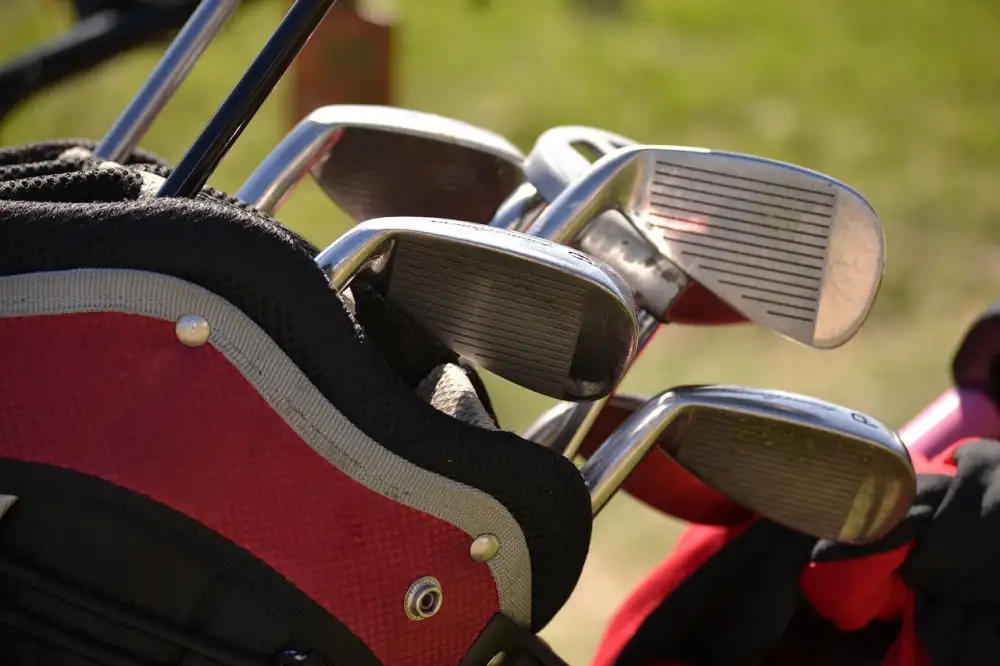
Golf is a sport that requires precision, skill, and the right equipment to succeed. One of the most important aspects of a golfer's arsenal is their set of golf clubs. Choosing the right combination of clubs can significantly impact your performance on the course. In this article, we will explore the essential golf clubs that every golfer should consider carrying in their golf bag for optimal performance. From drivers to putters, each club plays a unique role in helping you navigate the course and improve your game. Let's dive into the world of golf clubs and discover how they can enhance your overall experience on the green.
Driver
**Driver**
The driver is one of the most important clubs in a golfer's bag, designed for hitting long-distance shots off the tee. It typically has the longest shaft and the largest clubhead among all the clubs. Modern drivers are made of lightweight materials like titanium or carbon fiber to maximize clubhead speed and distance. The loft angle of a driver usually ranges from 8 to 12 degrees, with lower lofts producing lower ball flights for more roll, while higher lofts help golfers get the ball airborne easier. Adjustability features on drivers allow players to fine-tune loft, face angle, and weight distribution for optimal performance. A well-fitted driver can significantly improve a golfer's distance and accuracy off the tee.
Fairway Woods
Fairway woods are versatile clubs that can be used for a variety of shots on the golf course. Typically, golfers carry a 3-wood and a 5-wood in their bags. The lower the number on the wood, the lower the loft and longer the distance potential. Fairway woods are ideal for hitting off the fairway when you need more distance than an iron can provide, or when you need to navigate around obstacles like trees. They can also be handy off the tee on shorter holes where accuracy is key. The design of fairway woods allows for a larger clubhead and more forgiveness compared to long irons, making them easier to hit consistently for many golfers.
Hybrids
Hybrids have become a popular choice for many golfers due to their versatility on the course. These clubs combine the best features of both irons and fairway woods, making them ideal for various situations. Hybrids are designed to help players hit longer shots more easily from different lies, such as rough or fairway bunkers. They have a larger clubhead than long irons, providing more forgiveness and distance. Additionally, hybrids can be effective in replacing difficult-to-hit long irons, offering better launch angles and increased playability for golfers of all skill levels.
Irons
When it comes to irons, having a well-rounded set is crucial for a successful round of golf. Irons are designed for various distances and situations on the course. A typical set includes irons ranging from 3 to 9, with the lower numbers (3-5) providing more distance and the higher numbers (7-9) offering more precision and control.
The key to using irons effectively is understanding the loft of each club. Lower-numbered irons have less loft, making them ideal for longer shots from the fairway or rough. Higher-numbered irons have more loft, allowing for better accuracy and height when approaching the green or navigating hazards.
It's essential to practice with your irons to develop consistency in your ball-striking. Understanding the distance each iron covers will help you make informed decisions on which club to use in different situations on the course. With a solid set of irons in your bag, you'll be well-equipped to handle a variety of challenges during your round of golf.
Wedges
Wedges are essential clubs in a golfer's bag, designed for short approach shots and delicate shots around the green. The most common wedges are the pitching wedge (PW), gap wedge (GW), sand wedge (SW), and lob wedge (LW). Each wedge has a specific loft angle, with the PW having the least loft and the LW having the most. The higher loft of wedges allows for higher trajectory shots with more backspin, crucial for stopping the ball quickly on the green. When selecting wedges, consider your playing style and course conditions to determine which lofts will best suit your game.
Putter
**Putter**
The putter is arguably the most important club in your bag as it is used on almost every hole. It is designed for putting on the green, where precision and accuracy are crucial. Putters come in various shapes and sizes, including blade putters, mallet putters, and counterbalanced putters. The choice of putter largely depends on personal preference and putting style.
Blade putters are traditional in design with a thin, flat blade head that allows for more feel and control. Mallet putters have a larger, more forgiving head shape that helps with alignment and stability during the stroke. Counterbalanced putters have extra weight in the grip to promote a smoother stroke.
When choosing a putter, consider factors such as alignment aids, shaft length, and head weight to find one that suits your eye and stroke. Practicing with your putter regularly is key to developing consistency and confidence on the greens. Remember, the best putter is one that feels comfortable in your hands and helps you hole out efficiently.
In conclusion, having the right mix of golf clubs in your bag is crucial for optimal performance on the course. Each club serves a specific purpose and can greatly impact your game. From the powerful drives with the driver to the delicate shots around the green with wedges and putter, every club plays a vital role in helping you achieve success on the course. Remember to choose clubs that suit your playing style and skill level to enhance your overall performance and enjoyment of the game.
Published: 15. 03. 2024
Category: Home